
Thinning: When, Why and How to Thin Your Sprouts
Thinning is the process of cutting away extra sprouts in a yCube, leaving only the recommended number so the remaining plant(s) have enough light, nutrients, water, airflow, and space to grow strong and healthy. It’s one of the most important early steps because it prevents overcrowding and competition before they limit growth.
We intentionally overseed our yCubes to ensure reliable germination, so seeing multiple sprouts is normal. But more sprouts in one yCube does not mean more to harvest later. It may feel counterintuitive, but thinning to the recommended number early reduces competition and helps the plant(s) you keep develop strong roots, optimize growth, and ensure the best quality harvest.
Watch the video
At a Glance
The number of sprouts you keep depends on plant type
Keep 1 sprout for leafy greens, lettuces, fruiting plants and large flowers
Keep 3 sprouts for herbs and small flowers
Do not thin: Arugula, Chamomile, Chives, Garlic Chives and Wheatgrass
Timing: Thin about 5-7 days after they’ve been exposed to plant food
Use clean scissors and cut stems at the base (do not pull)
Each stem=one sprout, even if it has multiple leaves
Tip: Many lettuce, leafy green and herb sprouts are edible
Why Thinning matters
Thinning prevents competition for limited resources. When multiple sprouts share one yCube, they compete for the same light, water, nutrients, airflow and space, so no single plant reaches its full potential.
When too many sprouts grow in one yCube, you’re more likely to see:
Leggy, weak stems as sprouts stretch for light
Reduced airflow, increasing the risk of mold and pests
Uneven growth and slower establishment
Lower harvest quality later on
How many sprouts should I keep?
Keep 1 sprout per yCube
Lettuce and leafy greens
Fruiting plants
Large flowers
Tip: Leafy green, lettuce, and herb sprouts are all edible, so try ‘em out!
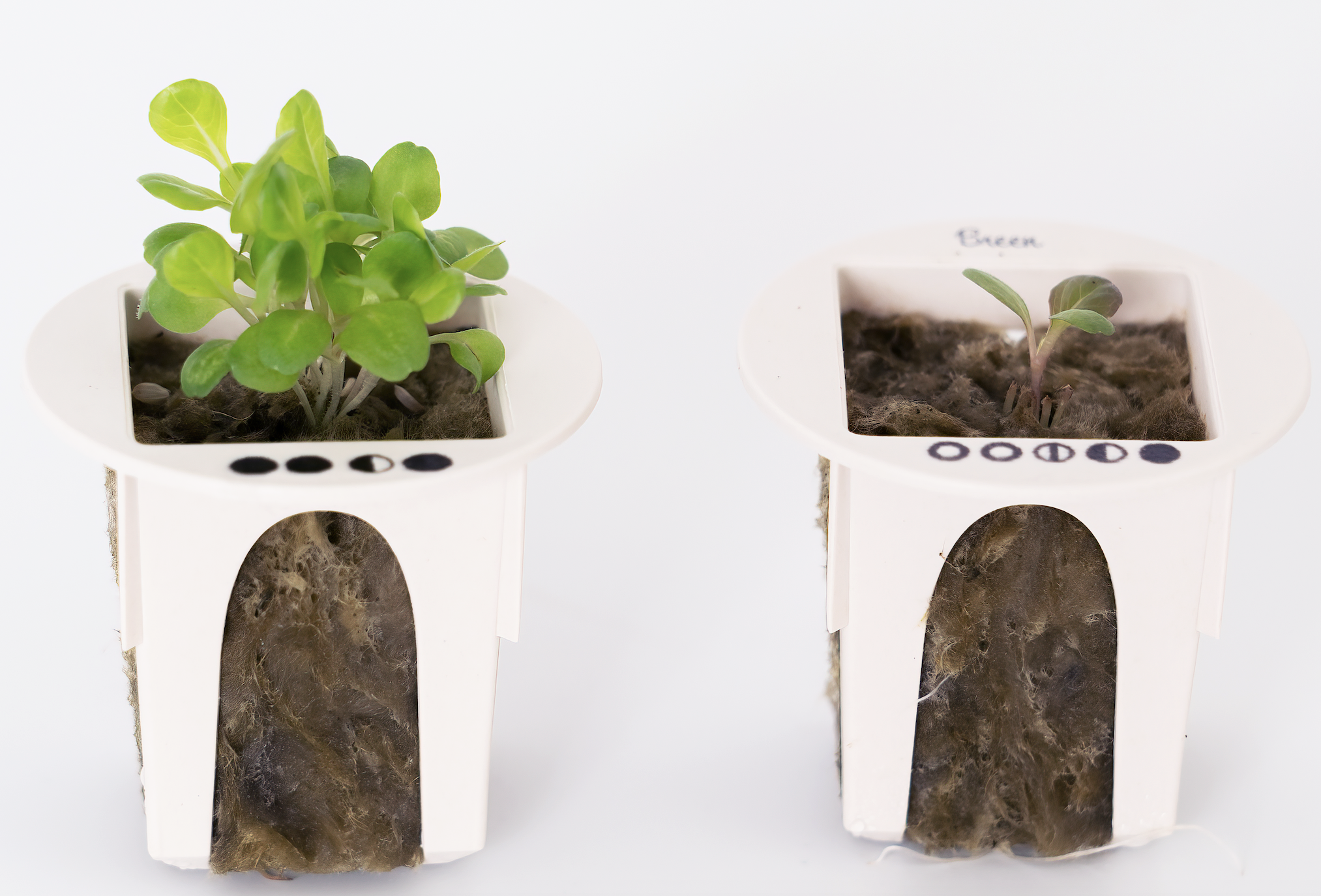
Leafy green yCube, unthinned (left) and thinned correctly to 1 sprout (right)
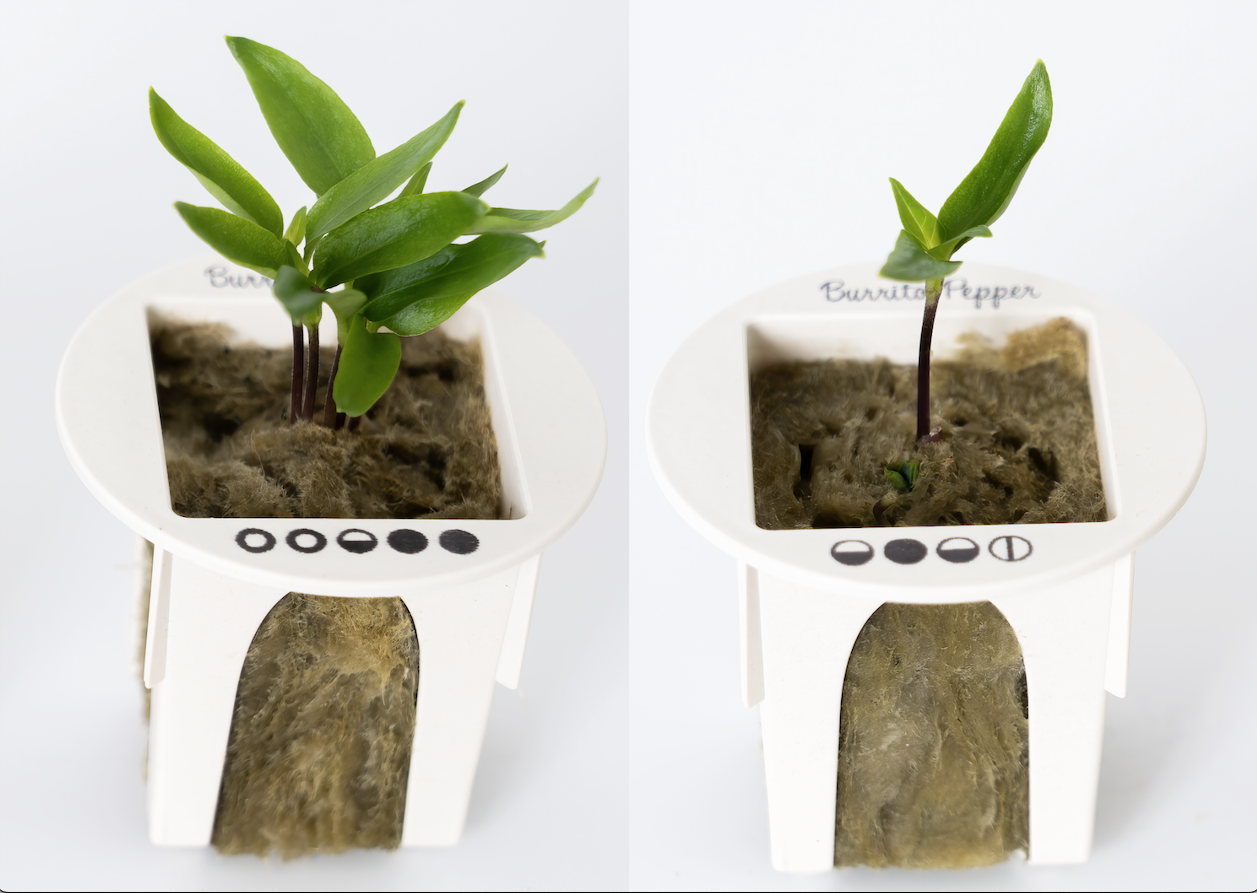
Fruiting plant yCube, unthinned (left) and thinned correctly to 1 sprout (right)
Keep 3 sprouts per yCube
Herbs
Small flowers
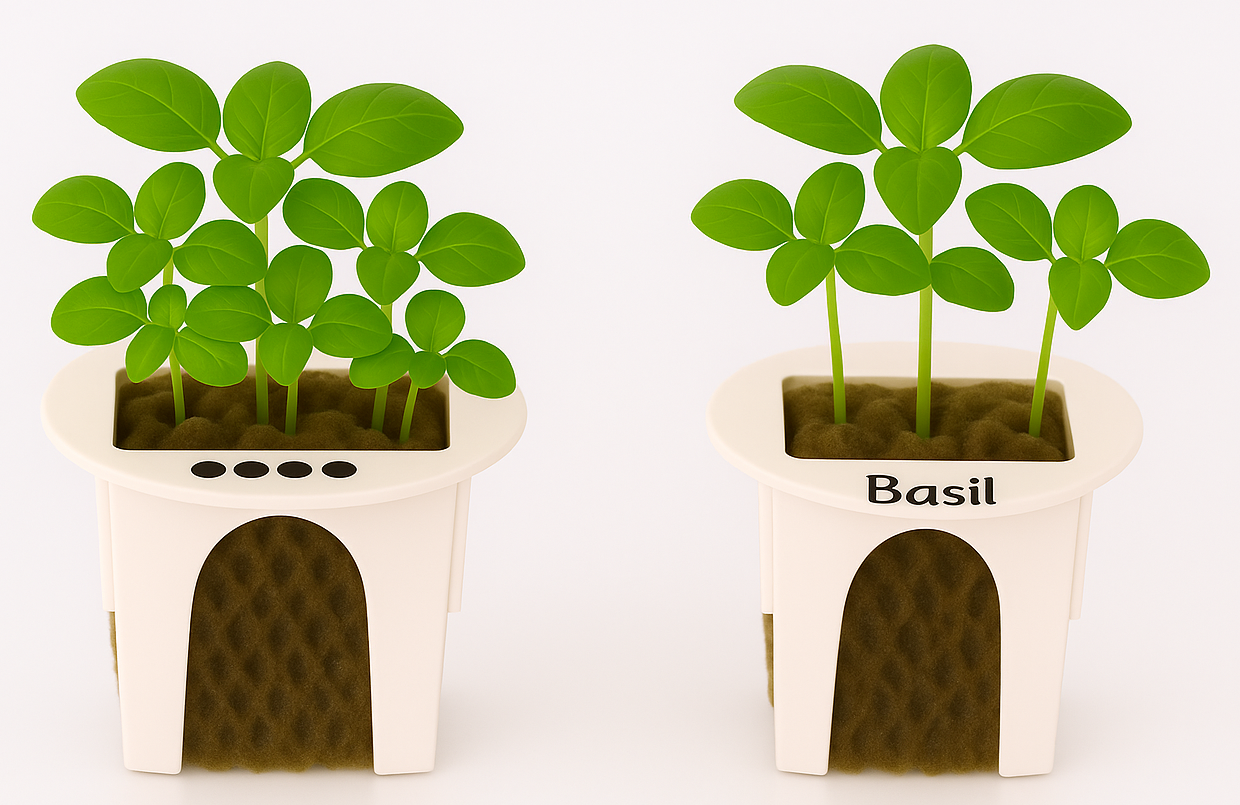
Unthinned Basil yCube,(left) and thinned to 3 sprouts remaining (right)
Do not thin (keep all sprouts)
Arugula
Chamomile
Chives
Garlic
Wheatgrass
Timing: When to Thin
Thinning is best completed 5-7 days after your sprouts have received plant food. This timing makes it easier to see which sprouts are truly thriving and gives the remaining sprouts room to develop.
Kelby will send a task in the app when it’s time to thin and will include step-by-step guidance. All you need is a clean pair of scissors (like Gardyn Scissors) to cut the extra sprouts at the base.
What counts as one sprout?
A sprout is one stem emerging from the rockwool. A single sprout may have multiple leaves. If there are multiple stems, there are multiple sprouts.
How to Thin Your Sprouts
Use clean scissors (like Gardyn scissors).
Confirm how many sprouts to keep based on plant type (typically 1-3 per yCube).
Cut unwanted sprouts at the base, as close to the rockwool as possible.
Do not pull sprouts out. Pulling sprouts out can damage the roots of the sprout(s) you’re keeping.
Optional: Add a yCover After Thinning
Once you’ve thinned your sprouts, consider placing a yCover on the yCube. Blocking light from reaching the rockwool is one of the most effective ways to reduce algae as your plant develops.
If you’re not sure what category your plant is in, use the list below to find it by name.
Plant list: How many sprouts to keep (by plant type and variety)
Keep 1 sprout
Fruiting plants: Banana Pepper, Burrito Pepper, Candy Cane Pepper, Cape Gooseberry, Cucumber, Dragon Beans, Fairytale Eggplant, Goliath Pepper, Green Beans, Hungarian Hot Wax Pepper, Jalapeño, Lemon Hot Pepper, Mini Eggplant, Mini Pumpkin, Mini Okra, Mini Squash, Peas, Poblano Pepper, Purple Beans, Purple Cayenne Pepper, Red Cherry Tomato, Shishito Pepper, Sweet Peppers, Thai Eggplant, Yellow Beans, Yellow Cherry Tomato
Lettuces & Leafy Greens: American Mustard, Breen, Bronze Arrow, Bull's Blood Beets, Buttercrunch, Butterhead, Cardinale, Celery, Collard Greens, Endive Lettuce, Flashy Trout Back, Green Bok Choy, Green Cabbage, Green Mustard, Green Salanova, Green Tatsoi, Hon Tsai Tai, Iceberg, Kale, Kale Lacinato, Kohlrabi (Purple and White), Lollo Rossa, Matilda, Mini Broccoli, Mini Cauliflower, Monte Carlo, Muir Lettuce, Perpetual Spinach, Pink Celery, Pink Swiss Chard, Purple Bok Choy, Radicchio, Red Amaranth, Red Mustard, Red Romaine, Red Sails Lettuce, Red Salad Bowl, Red Sorrel, Red Tatsoi, Romaine, Rouge d'Hiver, Shiso, Swiss Chard, Tokyo Bekana, Wasabi Greens, Yellow Swiss Chard
Large flowers: Bi-Color Sunflower, Blue Cornflower, Blush Hibiscus, Borage, Canna Flower, Sunflower, Red Hibiscus
Keep 3 sprouts
Herbs: Basil, Bunching Onions, Catnip, Chervil, Cilantro, Dill, Holy Basil, Italian Parsley, Lavender, Lemon Balm, Lemongrass, Lime Basil, Mint, Oregano, Purple Basil, Purslane, Rosemary, Sage, Savory, Stevia, Sweet Thai Basil, Sweet Marjoram, Tarragon, Thyme, Watercress
Small flowers: Black Viola, Celosia Mix, Dianthus, Fiesta Gitana, Fuchsia Snapdragon, Marigold, Nasturtium, Night-Scented Stock, Oopsy Daisy, Pink Petunia, Portulaca Mix, Purple Campanula, Purple Snapdragon, Radio Calendula, Red Impatiens, Scarlet Snapdragon, Stock Flower, Torenia, Viola, White Petunia, Yellow Snapdragon, Zinnia
Fruiting plants: Mini Strawberries (Red and Yellow)
Do not thin
Arugula; Chamomile; Chives; Garlic Chives; Wheatgrass
Questions? Reach us at support@mygardyn.com, or chat with us! We're here to help.
Get Self-Guided Help in the App
From a Mobile device, click here
From a laptop or desktop, click here for instructions